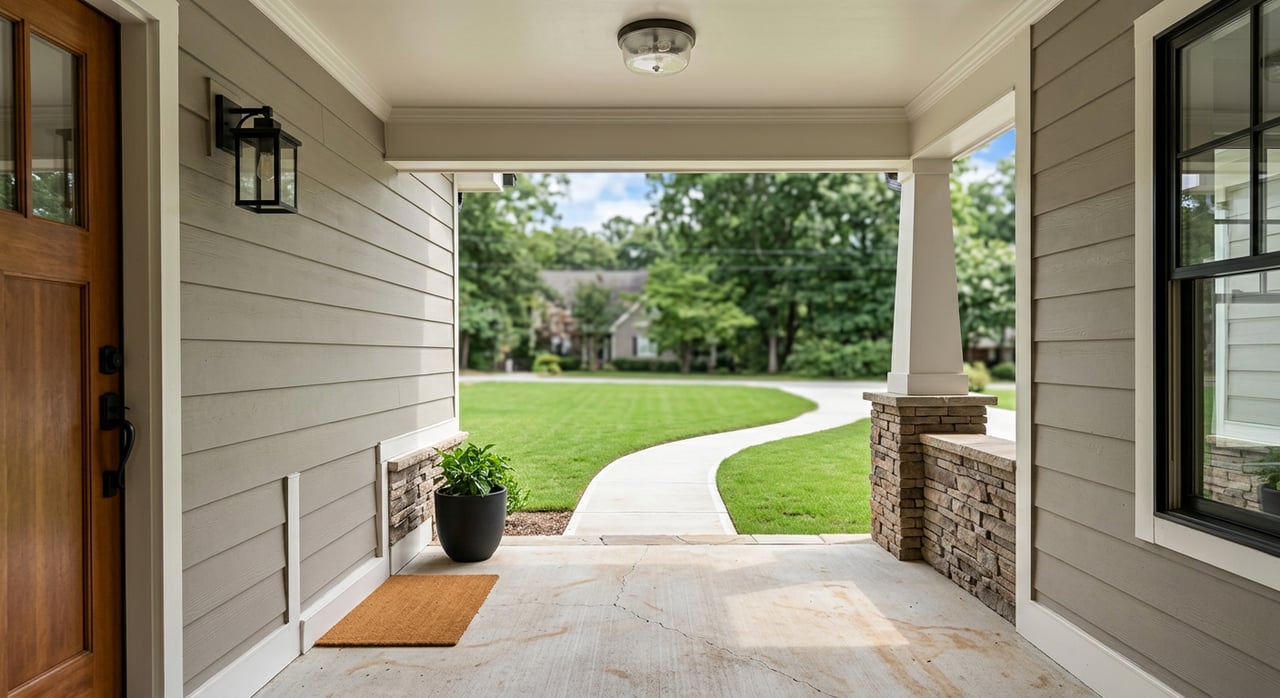
Thinking about trading a Greenville address for more space in Easley while keeping your job in the city? You are not alone. Easley has been growing fast, and the short hop into Greenville makes it a practical choice if you want more home for your budget. In this guide, you will learn realistic commute times, the best routes, lifestyle tradeoffs, and what typical budgets buy in Easley.
Let’s dive in.
Where Easley fits on the map
Easley sits northwest of downtown Greenville along the US‑123 corridor, also called Easley Bridge Road. Many commuters make the 13 to 18 mile trip daily, and your one‑way drive often falls in the 18 to 35 minute range depending on your exact start and end points and traffic. The city is growing, with an estimated 27,001 residents as of July 1, 2024, up about 17.6% since 2020, and the average Easley resident reports a 27.0 minute mean travel time to work compared with 19.0 minutes in Greenville. You can review the population and commute baselines in Census QuickFacts.
The US‑123 corridor carries high traffic volumes, which is why state and regional planners track it closely. For a sense of where volumes spike, see SCDOT’s regional traffic counts for Greenville County’s network in the latest AADT tables.
Your daily commute, decoded
Primary driving routes
For most people, US‑123 is the most direct line into Greenville. Depending on where you work, SC‑153 can be a smart alternate, especially if your office is near the I‑385 or Patewood areas. The SC‑153 extension was built to relieve congestion and support growth, which gives you another path when US‑123 is clogged. You can read about the project in SCDOT’s SC‑153 extension update.
Traffic patterns and timing
Plan for extra time in the usual peaks, roughly 7 to 9 AM and 4 to 6 PM. School drop‑offs, retail areas, and new housing growth add to the surges. If you want a true read on your day‑to‑day, test your exact route at 7:30 AM and again around 5:00 PM. For context on where the heaviest flows occur, review SCDOT’s traffic count tables.
Transit, shuttles, and biking
Greenlink is improving frequency on some Greenville routes, including service along Easley Bridge Road/White Horse Road, with 30‑minute headways planned in early 2026. That can help if you can reach a Greenville stop, but it is not the same as a frequent, direct bus from every Easley neighborhood to downtown. See the coverage in the Greenville Journal about Greenlink’s 30‑minute service and planning.
There are targeted shuttles tied to university and employer nodes, such as the Clemson CU‑ICAR connection, which serve specific destinations rather than a general Easley‑to‑downtown route. Check the CU‑ICAR shuttle details if your work is near that area. Daily bike commuting from Easley to central Greenville is a long round trip for most people, and roadway types make it challenging. Easley’s bike and pedestrian plan focuses on local connections rather than a daily bike alternative to Greenville; see the city’s ped/bike plan for context.
How life feels day to day
Time and schedule
Expect a longer door‑to‑desk time compared with living inside Greenville city limits. That extra time influences morning routines, after‑work outings, and which errands you do near work versus near home. If flexibility matters, consider a hybrid schedule, which many residents use to cut down the number of peak‑hour drives.
Home and space tradeoffs
Easley often offers more single‑family options at a given price point compared with many Greenville city neighborhoods. You will see newer subdivisions with yards, garages, and layouts that fit home offices. Regional MLS snapshots for the Western Upstate show active new‑home construction and a strong share of 3 to 4 bedroom homes in suburban communities around Easley and Powdersville. Review the Western Upstate market summary for samples and trends in the regional MLS report.
Amenities and going out
Greenville has a denser mix of restaurants, cultural institutions, and walkable destinations like Falls Park and the Swamp Rabbit Trail. Easley’s smaller downtown and suburban retail nodes are great for quick errands and quieter evenings. Many residents drive into Greenville for special dinners, shows, or weekend events. For a feel of downtown options, browse the VisitGreenvilleSC transportation page.
Schools and logistics
Easley is served by the School District of Pickens County, including Easley High and the area’s elementary and middle schools. Attendance zones vary by address, so verify the school assignment for any specific street. You can start with Easley High’s official page and the district’s resources when planning morning drop‑off routines.
What homes cost in Easley right now
Multiple data vendors report Easley medians in a similar band. Late‑2025 to early‑2026 snapshots place the typical sold or listed values roughly between 290,000 and 340,000 dollars depending on the source and metric. Greenville city medians tend to be higher in most feeds. If you want a single reference report to explore price‑per‑square‑foot patterns and neighborhood samples, consult the Western Upstate MLS regional report and pair it with up‑to‑date listing activity.
What that usually buys in Easley:
- Under 300,000 dollars: many resale homes, often 3 bedrooms with modest yards and older construction.
- 300,000 to 400,000 dollars: a wide range of single‑family homes in newer subdivisions, frequently 3 to 4 bedrooms with larger yards.
- 400,000 dollars and up: newer builds with larger lots or renovated in‑town homes, with thinner inventory at the top end.
For renters and owners comparing baseline costs, Census QuickFacts show Easley’s median gross rent and median value of owner‑occupied homes are lower than Greenville city in recent 5‑year ACS estimates. You can review those reference values in Census QuickFacts.
Smart game plan for Easley‑to‑Greenville commuters
- Test the commute twice. Drive your exact route at 7:30 AM and 5:00 PM. Try both US‑123 and SC‑153 if your workplace is near I‑385 or Patewood. Use SCDOT’s traffic counts for corridor context.
- Ask for sample commutes. Have your agent run home‑to‑office tests for peak and midday to compare routes and travel time consistency.
- Compare total household costs. Add fuel, maintenance, and any downtown parking to your mortgage or rent. For property taxes, remember South Carolina uses different assessment ratios for owner‑occupied homes vs other property; verify exact millage with county assessor tools.
- Confirm school zones. If children are in the picture, check the street’s attendance assignment with the district and factor morning drop‑off into your timing. Start with the district links from Easley High’s page.
- Plan for hybrid work or transit. If you can work from home a few days per week, your time tradeoff changes. Keep an eye on Greenlink’s service updates and planning for evolving options.
If you want help lining up homes that fit your budget, commute, and daily rhythm, reach out to Monica Barnett. You will get boutique, hands‑on guidance with deep Upstate market knowledge and a clear plan from first tour to closing.
FAQs
How long is the Easley to downtown Greenville commute during rush hour?
- Typical one‑way times fall in the 18 to 35 minute range, with longer windows likely around 7–9 AM and 4–6 PM. Test your exact route at 7:30 AM and 5:00 PM, and review SCDOT’s traffic counts for corridor hotspots.
Is there a direct bus from Easley to central Greenville for daily commuters?
- Greenlink is increasing frequency on some Greenville routes, including Easley Bridge/White Horse Rd, but there is not a universal, frequent point‑to‑point bus from every Easley neighborhood to downtown; see the Greenlink service update.
Which driving route is better, US‑123 or SC‑153?
- It depends on your workplace; US‑123 is the default, while SC‑153 can be faster for jobs near I‑385 or Patewood and benefits from the recent SC‑153 extension.
What price range typically buys a 3–4 bedroom home in Easley?
- Many 3 to 4 bedroom homes fall between 300,000 and 400,000 dollars based on regional MLS snapshots of Easley’s inventory; see the Western Upstate MLS market report for examples.
Are Easley schools part of Greenville County Schools?
- No. Easley is in the School District of Pickens County. Attendance zones vary by address, so verify with district resources starting from Easley High’s page.
Can I bike commute from Easley to Greenville daily?
- For most people it is not practical due to distance and roadway types; Easley’s plan focuses on local bike/walk connections rather than a 20–30 mile round‑trip commute, as outlined in the city’s ped/bike plan.