Thinking about a townhome or condo in Simpsonville but not sure where to start? You want the space and value that fit your life, without taking on more maintenance than you need. In this guide, you’ll get a clear look at prices, typical layouts, HOA costs, taxes, financing, and a buyer checklist so you can shop with confidence. Let’s dive in.
Why attached living works in Simpsonville
Attached living gives you a smart mix of value and convenience. You’ll often find lower purchase prices than comparable single-family homes, plus less exterior upkeep. Many communities add amenities like a pool or clubhouse, and locations near shopping or commuter routes can reduce your drive time.
Condos and townhomes also offer flexible options for different life stages. Whether you want single-level living, more space with an attached garage, or a low-maintenance lock-and-leave, you can likely find it in Simpsonville.
Market snapshot: what to expect now
- Price context: Recent portal data shows Simpsonville’s median listing price around $399,900 (Realtor.com, Dec 2025). Zillow’s home-value index was about $369,997 (Jan 31, 2026). Different sources use different methods, so focus on trends and your budget.
- Townhomes: Recent Simpsonville-area townhome medians have hovered near $290,900 over a 12‑month window. Entry points often start in the low-to-mid $200Ks and run into the low $300Ks depending on age, size, and finishes.
- Condos: Simpsonville’s condo supply is modest. Recent listings have appeared roughly in the $140K to $315K range, commonly 1,000 to 1,650 sq ft.
- Market tempo: Median days on market often ranges about 36 to 70 days depending on property type, price band, and condition.
Prices and inventory move quickly. If you want a precise read on today’s market, ask for a custom CMA before you start touring.
Condos: layouts and what’s included
Condos in Simpsonville typically come in garden-style or townhouse-style condominium regimes. You’ll commonly see 2 to 3 bedrooms and about 1,000 to 1,650 sq ft. Many communities include exterior maintenance and upkeep of shared amenities in the HOA dues. Some also include water and trash. Always confirm what your specific HOA covers.
Ownership in a condo is part of a recorded “horizontal property regime,” which in South Carolina is governed by the South Carolina Horizontal Property Act. If you plan to buy a condo, it helps to understand how the association allocates costs and maintains the building under that statute. You can review the act’s requirements in the South Carolina code for the Horizontal Property Act.
- Read the South Carolina Horizontal Property Act: Title 27, Chapter 31
Townhomes: space and low maintenance
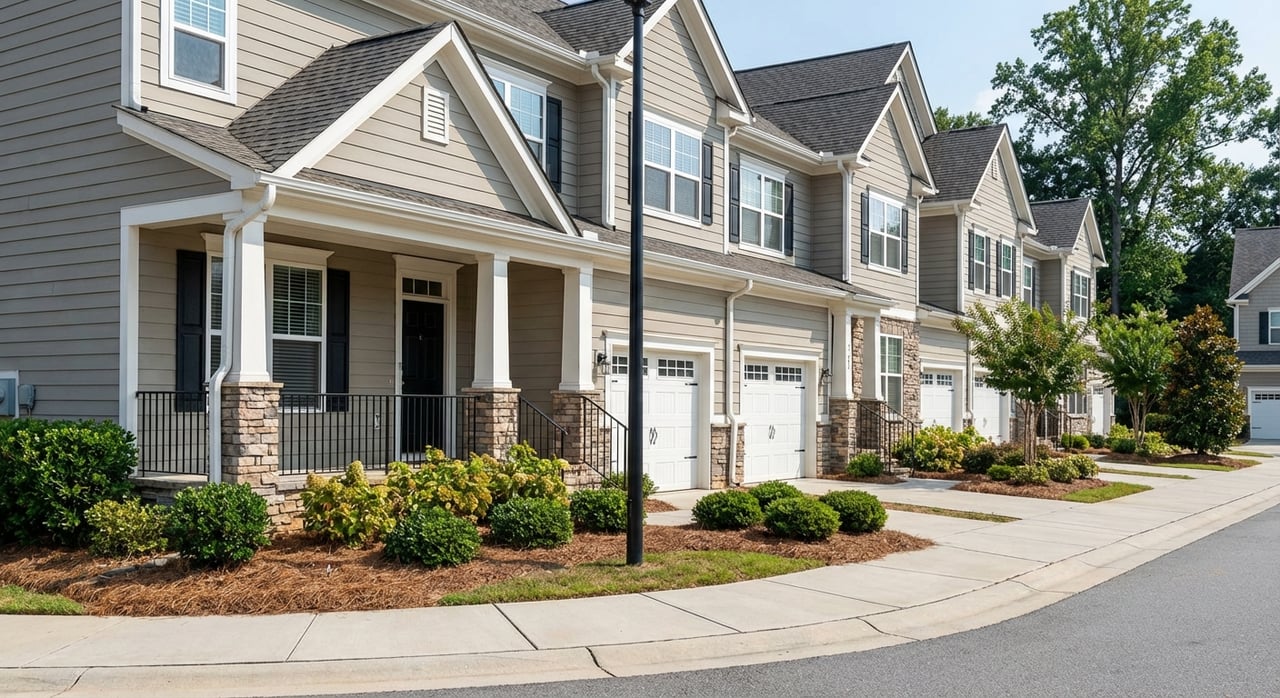
Most Simpsonville townhomes are 2 to 3 stories with an open main level, bedrooms upstairs, and a 1- or 2-car attached garage. Sizes commonly run about 1,200 to 1,800 sq ft for newer product. Many HOAs cover exterior or lawn maintenance, which helps reduce weekend chores. On resales, expect transfer or management fees at closing. If you’re comparing units, check exactly which exterior elements are your responsibility versus the HOA.
Costs and paperwork to budget for
HOA dues and what they cover
Many newer townhome communities in Simpsonville report monthly HOA dues in the $100 to $200 range on recent listings. Coverage often includes exterior or lawn maintenance, common-area upkeep, and sometimes trash service or contributions to master insurance. Always verify the latest dues and what they include in the association documents and disclosures.
Property taxes: South Carolina basics
South Carolina taxes primary residences at a 4 percent assessment ratio, while second homes and most other residential property are typically assessed at 6 percent. If you occupy your townhome or condo as your primary residence, apply for the 4 percent legal residence rate with Greenville County once you’re eligible.
- See how SC property taxes are calculated: Assessment ratios explained
- Look up parcel taxes by address: Greenville County tax portal
Insurance: condo vs. townhome
- Condos: You’ll typically carry an HO‑6 (condo) policy for interior finishes, personal property, and liability. The association’s master policy usually covers the exterior shell and common elements. Confirm whether the master policy is “bare walls” or “all‑in,” because that changes how much interior coverage you need.
- Townhomes: If the property is fee-simple, you usually carry a standard homeowners policy (HO‑3/HO‑5) that covers the structure and your lot. Some HOAs also hold a master policy, so coordinate coverage limits to avoid gaps.
Learn more about HO‑6 coverage here: Condo insurance basics
Financing and approvals
Condos: FHA and VA loans generally require the condo project to be approved before closing. If a complex is not already approved, getting it approved can take time. Confirm project status early to protect your timeline.
Townhomes: Fee-simple townhomes often qualify for the same conventional, FHA, or VA financing as detached homes, but always check specifics with your lender.
Check federal condo approval status: HUD condo lookup
HOA governance and disclosures
South Carolina has strengthened buyer access to HOA information through updates to association and disclosure rules. Sellers must disclose whether a property is subject to an HOA, and buyers should request governing documents and budgets during due diligence.
- See SC disclosure updates: Section 27‑50‑40 and related bill history
Lifestyle, location, and commute
Simpsonville sits about 12 to 16 miles from downtown Greenville, with typical drive times of roughly 15 to 25 minutes depending on route and traffic. Try your route during peak hours to confirm your timing.
- Explore distance and time: Simpsonville to Greenville drive
You’ll find an active downtown, parks like Heritage Park, and growing dining and retail nodes nearby. If schools are a priority, Simpsonville addresses are served by Greenville County Schools. Always verify the exact school assignment for a specific home using district resources, since zones can vary by street.
- Review district resources and profiles: Greenville County Schools
How to choose the right fit
- List your must-haves. Number of bedrooms, garage needs, stairs vs. single-level, and preferred commute.
- Decide your maintenance comfort. Do you want the association to handle most exterior items, or are you comfortable with more owner responsibility?
- Clarify your financing. If you need FHA or VA, focus on condo projects that are already approved, or pivot to fee-simple townhomes.
- Evaluate HOA health. Strong reserves, clear rules, and transparent budgets are good signs. Low reserves or frequent special assessments deserve a closer look.
Buyer due-diligence checklist
Before you waive contingencies, request and review these items for any condo or townhome you’re considering:
- Governing documents: Declaration/Master Deed, Bylaws, Rules and Regulations. For condos, see the SC Horizontal Property Act for statutory requirements.
- Current budget and financials: Operating and reserve balances. Compare to community assets like roofs, roads, and pools. See why reserves matter: Reserve funding primer.
- Reserve study and special assessment history: Ask about upcoming capital projects that could add costs.
- Recent HOA meeting minutes and any pending litigation: Transparency here helps you assess risk. Guidance on buyer access: HOA disclosure practices.
- Insurance declarations: Master policy coverage and what owners must insure. Learn the basics of HO‑6: Condo insurance overview.
- Estoppel or resale certificate: Confirms dues, unpaid balances, and transfer fees.
- Project approval status and ratios: If using FHA/VA, verify project approval and owner-occupancy standards early. Check status here: HUD condo lookup.
- Management agreement and key vendor contracts: Know terms, fees, and responsibilities.
- Use restrictions: Rental caps, short-term rental rules, pet policies, and exterior modification rules.
- For townhomes: Recorded plat and covenants that define lot lines and who maintains which exterior elements.
If you want a printable version of this checklist for showings, ask for a copy tailored to the community you’re touring.
Ready to compare options in Simpsonville?
When you’re weighing condos against townhomes, the right choice comes down to lifestyle, maintenance preferences, and budget. A local, side-by-side look at active listings, HOA health, and commute fit will help you move forward with clarity. If you’d like a current market snapshot, a short list of on‑target communities, or a guided tour plan, connect with Monica Barnett for a free consultation.
FAQs
How much are typical HOA dues for Simpsonville townhomes and condos?
- Many newer townhome communities show $100 to $200 per month on recent listings, while condo dues vary by amenities and what utilities are included. Always confirm the latest dues and inclusions in the HOA documents.
What’s the difference between a condo and a townhome in South Carolina?
- A condo is part of a horizontal property regime with shared ownership of common elements, while a fee‑simple townhome typically includes ownership of the structure and underlying lot. See the SC Horizontal Property Act for condo rules.
Do FHA or VA loans work for Simpsonville condos?
- Yes, if the condo project is approved for those programs. Check status early using the HUD condo lookup or talk with your lender about options.
How are Greenville County property taxes calculated for a primary residence?
- Primary residences are assessed at 4 percent of fair market value, while most other residential property uses 6 percent. Verify your parcel details on the Greenville County tax portal and apply for the 4 percent rate if eligible.
What should I review in the HOA packet before I buy?
- Focus on governing documents, budget and reserves, reserve study, meeting minutes, master insurance, estoppel certificate, project approval, vendor contracts, and use restrictions. This helps you spot risk and future costs.